 214-904-9400


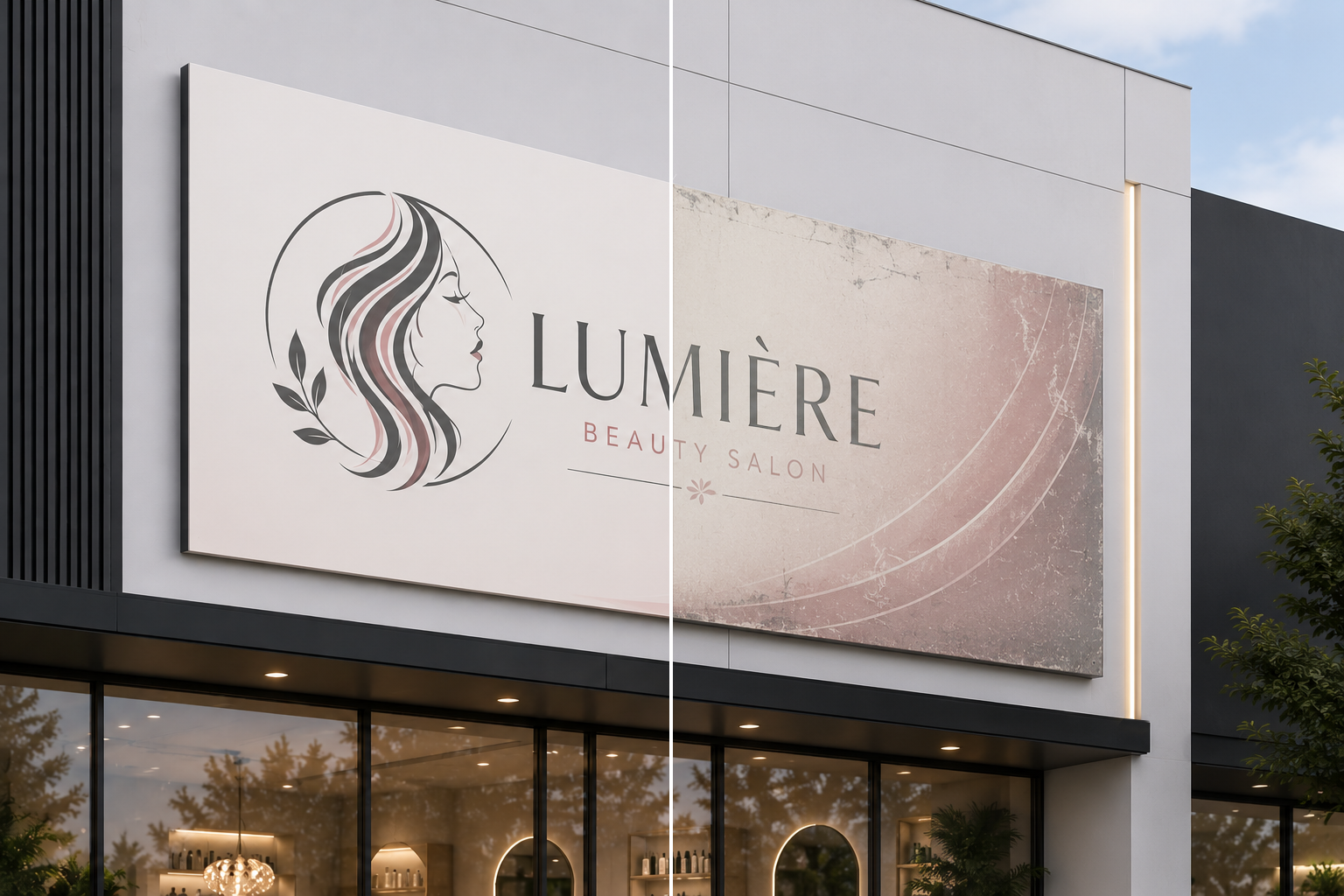
Outdoor Graphics Do Not Fail All at Once
Outdoor signage rarely fails in a dramatic moment. There is no single day when a building wrap or a monument sign suddenly stops working. Instead, outdoor graphics degrade gradually, a little color loss here, a small crack in a laminate there, until one day a business owner looks up and realizes the sign that once looked sharp now looks tired, faded, or embarrassing next to a newer storefront nearby.
Understanding roughly how long different outdoor materials should last, and knowing the specific warning signs that signal it is time to replace rather than repair, helps businesses budget for replacement before customers start noticing the decline first.
Why Lifespan Varies So Much by Material
One of the most common misconceptions about outdoor signage is that all printed graphics age at roughly the same rate. In reality, lifespan depends heavily on substrate, ink type, lamination, and orientation to the sun. A south-facing wall in a hot climate will age graphics faster than a shaded north-facing wall in a milder region. Two identical banners installed on the same day, in different locations, can look meaningfully different within a single year.
Cast vinyl, generally considered the premium substrate for long-term outdoor use, is engineered to hold its shape and resist shrinking over years of sun exposure. Calendered vinyl, a lower cost alternative often used for shorter-term applications, tends to shrink, crack, and fade noticeably faster, sometimes within a single season of harsh summer heat. Rigid substrates like aluminum composite material are built for permanent installations and typically far outlast fabric or vinyl banners used in the same location.
General Lifespan Expectations
As a rough guide, standard vinyl banners with UV-resistant ink can be expected to hold acceptable color and structural integrity for one to three years outdoors, depending on climate and sun exposure. Premium cast vinyl with high-quality laminate can extend that range to three to five years in more moderate conditions. Rigid substrates like aluminum composite panels, when properly installed, often perform well for five to ten years or longer. Building wraps and large format mesh banners, due to constant wind and UV exposure at scale, typically sit on the shorter end of the range even when premium materials are used, often needing replacement within one to two years for high-traffic, highly visible installations.
These numbers are guidelines, not guarantees. A banner in a hot, sun-exposed parking lot may fade well before the two-year mark, while the same banner mounted in partial shade in a milder climate could still look presentable well past three years.
Warning Sign One: Color Shift and Fading
The most visible sign of aging outdoor graphics is color shift. UV exposure breaks down pigments over time, and reds and yellows typically fade faster than blues and greens due to how those pigments absorb light. A logo that once had a rich, saturated brand color can shift to a washed out, chalky version of itself. If side by side comparison with an original proof or a newer print shows a noticeable difference, that is a clear signal the graphic has moved past its effective lifespan, since brand color accuracy directly affects how customers perceive quality and trust.
Warning Sign Two: Cracking and Delamination
As vinyl and laminates age, the materials lose flexibility. Cracking often first appears at fold lines, grommet holes, or areas with the most direct sun and wind exposure. Delamination, where the printed layer starts separating from the laminate or substrate underneath, shows up as bubbling, peeling edges, or a hazy, cloudy appearance across the surface. Both conditions accelerate quickly once they begin, since exposed edges allow moisture and further UV damage to reach layers that were previously protected.
Warning Sign Three: Structural Shrinkage or Warping
Lower grade vinyl and some rigid substrates can shrink, stretch, or warp with repeated temperature swings between hot days and cool nights. Banners that no longer sit flat in their frame, or rigid signage that has started to bow or curl at the edges, are showing structural failure that goes beyond a cosmetic issue. At this stage, the material itself is compromised, and additional exposure will only make the distortion worse.
Warning Sign Four: The Neighbor Comparison Test
Sometimes the clearest signal has nothing to do with a technical inspection. If a business owner notices that a competitor’s or neighboring business’s signage looks noticeably sharper, brighter, or more professional in a side by side comparison, that perception gap matters just as much as any measurable fading. Customers form impressions quickly, and dated or faded signage can quietly signal that a business is not being maintained, even if everything happening inside the store tells a different story.
Repair, Refresh, or Full Replace?
Not every issue requires a full replacement. Grommets can sometimes be repaired or replaced on an otherwise sound banner. Cleaning can restore some vibrancy to graphics suffering from dirt buildup rather than true UV fading. But once color shift, cracking, or delamination sets in across a meaningful portion of the graphic, patch repairs rarely restore the original look, and continuing to display a visibly aged sign often does more brand damage than the cost of a proper replacement.
Building a Replacement Schedule Instead of Waiting for Failure
The businesses that manage outdoor signage most effectively do not wait until graphics look obviously worn to plan a replacement. Instead, they build a rough replacement schedule based on material type and location, checking key exterior graphics annually and budgeting for replacement before visible degradation sets in. This proactive approach spreads signage costs predictably across budget cycles rather than facing a surprise expense once a sign has already become a liability to the brand.
XL Digital helps businesses evaluate existing outdoor signage, recommend the right materials for specific climates and sun exposure, and plan replacement schedules that keep storefronts and building graphics looking sharp year round. If your signage is showing its age, reach out and we will help you map out what