 214-904-9400


Construction Site Signage Is Doing More Work Than People Realize
Walk past most active construction sites and you’ll notice the fencing, the equipment, maybe the crane if the project’s far enough along. What you probably won’t consciously notice is the signage, which is a little strange, because it’s doing a surprising amount of work behind the scenes.
Construction site signage isn’t one thing. It’s really three different jobs stacked on top of each other: keeping people safe, helping them find their way around a space that’s constantly changing, and, more often than people expect, telling a story about the project itself.
Safety Signage Isn’t Optional, But It’s Not One-Size-Fits-All Either
OSHA and local jurisdictions set requirements for a lot of what needs to be posted on an active site, things like hazard warnings, PPE requirements, and site access rules. That part isn’t really up for debate. But there’s a wide range in how well that signage actually gets executed.
We’ve seen safety signage that’s clearly an afterthought, faded, poorly placed, printed on flimsy material that doesn’t survive two weeks of weather. And we’ve seen it done well, where the signage is legible from a distance, durable enough to survive the length of the project, and placed where people actually look, not just where it’s technically compliant.
That distinction matters more than it might seem. A safety sign that’s fallen over or faded to unreadable isn’t doing its job anymore, no matter how compliant the original install was.
Wayfinding on a Site That Changes Every Month
Here’s the thing about construction site wayfinding that makes it different from almost any other kind of signage: the site itself is a moving target. A path that made sense in month two of a project might be blocked entirely by month five. Access points shift. Staging areas move. What was open ground becomes a foundation.
That reality shapes how we think about materials and mounting for site wayfinding. A-frame signs and freestanding directional signage that can be relocated easily tend to make more sense than permanently mounted pieces, at least until the site stabilizes closer to completion. Durable, weather-resistant materials matter here too, since site signage isn’t getting the kind of protection an indoor sign would.
For larger commercial projects, especially ones where deliveries, subcontractors, and visitors all need to navigate the same site, clear directional signage isn’t a nice-to-have. It’s the difference between a delivery truck finding the right dock on the first try and one that’s circling the block asking someone for directions.
Quick Reference: Signage Type and Material Fit
|
Signage Need |
Recommended Material |
|
Safety and hazard signs |
Cast vinyl with UV-stable inks, rigid backing |
|
Perimeter fence branding |
Mesh vinyl (wind load rated) |
|
Temporary wayfinding |
Coroplast on A-frame or stake mounts |
|
Permanent site signage |
ACM or Dibond |
|
Access and delivery signage |
Cast vinyl or coroplast depending on duration |
The Branding Piece People Don’t Expect
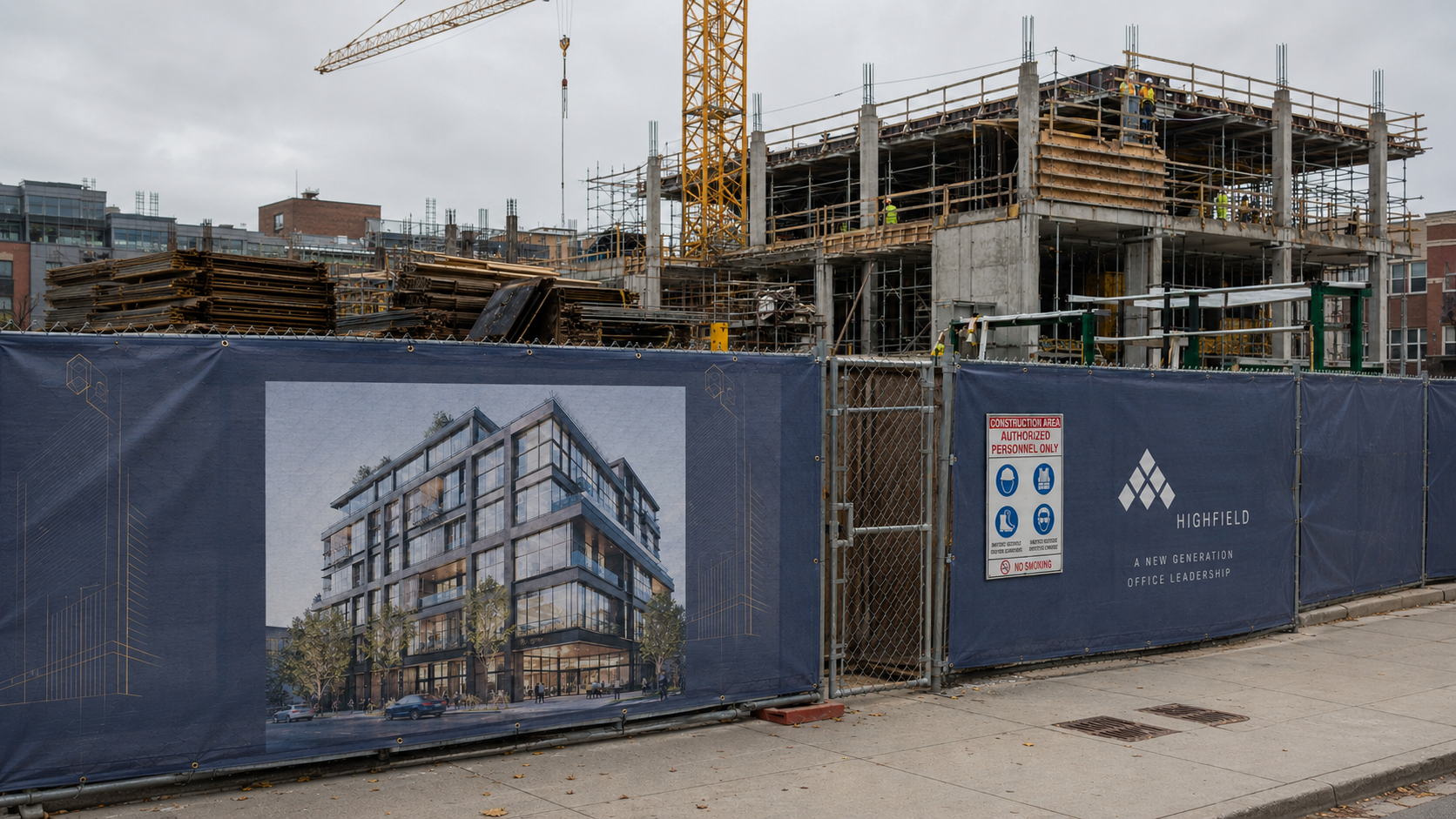
This is the part of construction signage that surprises people the most. A lot of general contractors and developers now treat the construction fence itself as a marketing opportunity. Mesh banners or vinyl wraps on perimeter fencing can show renderings of the finished project, list the development team, and build anticipation for whatever’s coming, whether that’s a retail space, an apartment complex, or a corporate headquarters.
It’s a smart use of otherwise wasted real estate. That fence is going to be there for months, sometimes years, and it’s facing traffic and foot traffic the whole time. A well-designed wrap does more for a project’s visibility than most people give it credit for, and it tends to leave a much better impression on the neighborhood than a bare chain-link fence ever will.
Materials That Actually Hold Up on an Active Site
Construction sites are hard on signage in ways a lot of environments aren’t. Dust, mud, equipment traffic, and long exposure to sun and weather all take a toll faster than they would in a typical outdoor setting. Mesh vinyl handles wind loads on fencing without acting like a sail. Coroplast works well for temporary directional signs that might need to be moved or replaced as the site evolves. For anything staying up the full length of a longer project, cast vinyl and UV-stable inks matter more here than almost anywhere else, since a faded, unreadable safety sign six months into a project isn’t just an eyesore, it’s a liability.
Planning It Before the Site Breaks Ground
The projects that handle signage well are almost always the ones where it got planned alongside the site logistics, not bolted on after the fact. Knowing roughly how long the project will run, how the site layout is expected to change, and which areas need permanent versus temporary signage lets a print partner recommend the right materials from the start instead of reacting to problems as they come up.
If you’ve got a project breaking ground and haven’t thought through the signage plan yet, XL Digital can walk through it with you, safety, wayfinding, and branding included, before the first piece of equipment shows up on site.