 214-904-9400


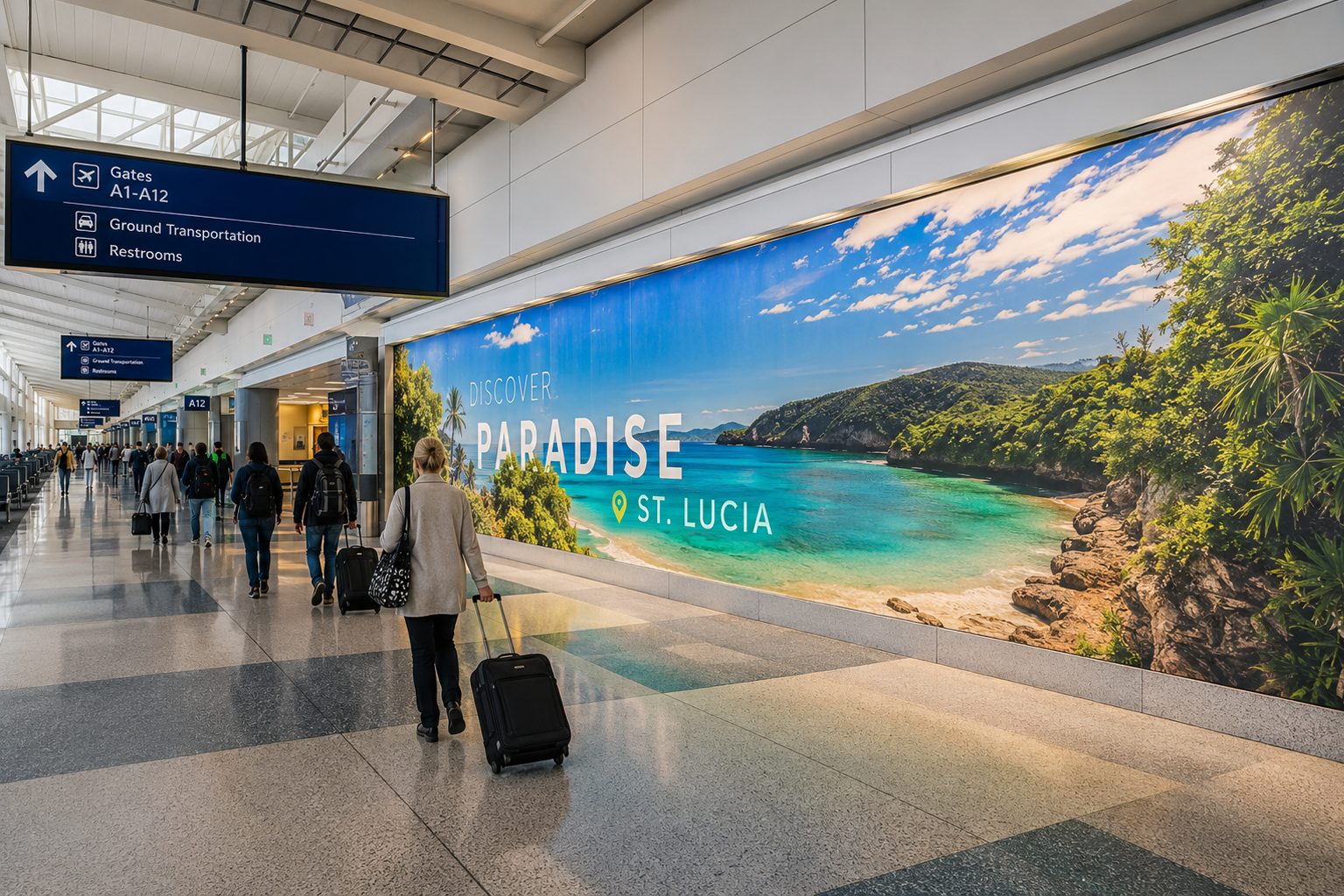
Getting graphics right in this environment requires understanding all three of the jobs those graphics must simultaneously perform: calming the traveler, directing them efficiently, and advancing a brand. When those three objectives work together, the result is a terminal that feels intuitive and welcoming. When they work against each other, the result is a chaotic, visually noisy space that adds to the stress of travel rather than reducing it.
Calming: The Underestimated Job of Airport Graphic
Airports have invested heavily in understanding the psychology of the traveler experience. One consistent finding is that visual environments have a measurable effect on perceived stress and wait times. A long concourse with bare walls and fluorescent lighting feels longer and more exhausting than the same concourse with intentional graphic treatments. This is not an aesthetic preference. It is a documented behavioral response to environmental design.
Large-format graphics play a central role in this. Full-wall murals in terminal corridors that draw the eye forward create a sense of forward momentum and reduce the perceived length of a walk. Nature imagery, local art, and regional photography create visual anchors that give travelers something to engage with rather than stare at departure monitors with anxiety. Backlit fabric installations soften the harshness of airport lighting and create zones that feel more human in scale.
The print quality requirements for this application are significant. A mural that stretches across 60 feet of terminal wall will be viewed from close range by thousands of travelers every day. Banding, color inconsistency, or visible seams destroy the effect the graphic is meant to create. The substrate needs to hold up under the specific lighting conditions of the installation and remain visually consistent over time, because airport graphics installations are not replaced seasonally.
Directing: Wayfinding at Scale
Wayfinding in airports is a discipline unto itself, and large format printing is one of its primary tools. Concourse identifiers, gate zone graphics, floor graphics that guide passengers through complex intersections, wall treatments that distinguish one terminal from another in multi-terminal facilities. These graphics carry a functional load that most commercial signage does not. A traveler who misreads a wayfinding graphic misses a flight.
The production requirements for airport wayfinding graphics are demanding in specific ways. Color consistency across an entire terminal system is critical because the graphic language of wayfinding depends on travelers’ reading colors as signals. If the blue used to indicate concourse B in terminal one does not match the blue used in terminal two, the system breaks down. This requires a print partner with color management discipline rigorous enough to maintain consistency across large production runs, potentially printed at different times as the installation is phased.
Durability is equally important. Airport floor graphics in high-traffic zones face conditions that would destroy standard print applications within weeks. The materials used for floor wayfinding in terminals need to handle foot traffic, cleaning chemicals, cart wheels, and occasional heavy equipment without losing color integrity or becoming a slip hazard. Selecting the wrong substrate is not a minor error in this environment. It is a safety issue.
Branding: The Airport as a Billboard
For airlines, airports, retailers, and regional tourism boards, the terminal environment represents one of the highest-value branding opportunities available. A traveler moving through a gate area has nowhere to go. They are a captive audience with time to fill and a heightened awareness of their surroundings. Gate wall graphics, jetway wraps, baggage claim installations, and concourse advertising all reach this audience at a moment when they are genuinely paying attention.
Airlines in particular have become sophisticated users of large-format airport graphics. A jetway wrap that immerses a passenger in a destination before they board the plane creates an emotional anticipation that no digital ad achieves. A gate area graphic campaign that covers an entire concourse with consistent creative establishes a brand presence at the scale the airport environment demands. Smaller executions simply disappear in a terminal.
Regional airports have increasingly used terminal graphics to establish a sense of place and welcome visitors to a destination before they exit the building. Wall murals depicting local landscapes, industries, or cultural landmarks tell arriving travelers something about where they have landed and give the airport itself a distinct identity rather than the generic corporate environment that characterizes many smaller facilities.
The Logistics Reality of Airport Installations
Printing for airport installations is only part of the challenge. The logistics of getting graphics produced, delivered, and installed in an active airport environment add a layer of complexity that eliminates most print vendors from consideration before the conversation even begins.
Airport installations happen at night or in narrow maintenance windows when terminal traffic is lowest. Graphics need to arrive at the facility packaged and organized in a way that allows installation crews to work efficiently in a compressed timeframe. A shipment that arrives damaged, mislabeled, or in the wrong installation sequence does not get a do-over when a terminal reopens at 5 a.m. The print partner’s ability to package, label, and coordinate delivery with the precision the environment requires is as important as the quality of what they printed.
Airport authorities and TSA also impose access requirements and credentialing processes that add planning time to any installation. A print partner who understands the operational reality of airport projects builds that time into the production schedule rather than treating it as the client’s problem.
What XL Digital Brings to Terminal Projects
The demands of airport graphic work align precisely with what XL Digital has built over more than 24 years: color management rigorous enough to hold consistency across large and phased production runs, material expertise that covers the full range of substrates required from backlit fabric installations to high-traffic floor graphics, and operational discipline that treats packaging and delivery as part of the product rather than an afterthought.
We work with clients who face fixed, non-negotiable deadlines in complex installation environments every day. Trade show opening dates, stadium game days, retail grand openings. The airport context is different in its specifics but identical in what it requires from a print partner: show up with the right product, on time, packaged correctly, with zero surprises. That is what we do.
If you are managing a terminal graphic project, a gate area campaign, or a wayfinding installation and need a print partner who can handle the scale and complexity the environment demands, we want to hear about it. Contact us at xldigital.com or call 214-904-9400.